
Case Status: Pending
“Orwellian” Law Compels 32 Million Small Organizations and Their Owners to Surrender Confidential Information—or Face Criminal Prosecution

Texas Top Cop Shop, Et Al. v. Todd Blanche, Et Al.
UPDATE:
On May 6, 2026, CIR petitioned the Supreme Court to hear our constitutional challenge to the Corporate Transparency Act (CTA), arguing that the law exceeds Congress’s enumerated powers and violates the Fourth Amendment. The petition gives the Supreme Court the opportunity to take this case alongside National Small Business United v. Bessent, a case from a different federal circuit court that considered similar constitutional challenges to the CTA but reached the opposite result from the federal judge in our case.
These important constitutional issues are not going away. Although the Trump administration issued an interim regulation in 2025 exempting domestic corporations from the CTA’s requirements while it reconsiders its position, the statute itself remains on the books. Even a supposedly “final” regulatory exemption is not a constitutional ruling and may be changed in a future administration. The Supreme Court has the ability to take up the case now and issue a constitutional ruling, even though the U.S. Fifth Circuit Court has not yet ruled in the case.
The Corporate Transparency Act (CTA) is a sweeping law that compels tens of millions of owners of small businesses and nonprofit organizations to file reports about their ownership and control with the Treasury Department’s Financial Crimes Enforcement Network (FinCEN)—under threat of criminal punishment. Those reports must disclose sensitive personal information, including names, home addresses, dates of birth, and copies of identifying documents, such as a passport or driver’s license of those who “control” the organizations. FinCEN can then make this confidential information available to state and federal law enforcement to search for evidence of crimes. Any entity that fails to file a complete and accurate report faces both civil and criminal penalties.
CIR represents Texas Top Cop Shop and a coalition of small businesses (including a family dairy), the Libertarian Party of Mississippi, and the National Federation of Independent Business—an advocacy organization representing nearly 300,000 small business members nationwide—in challenging this federal mandate that forces ordinary businesses and civic associations to surrender confidential information to a federal law-enforcement database.
CIR brought this case as part of its project to restore federalism and limit federal agencies to the powers granted by the Constitution. The CTA is unconstitutional for several reasons, but the most basic is that the federal government has no power to enact it. A victory would protect small-business owners and nonprofit organizations from an unprecedented federal surveillance mandate while reaffirming a foundational principle: Congress cannot compel every locally incorporated business in America to register its private ownership information with the federal government simply because it once filed paperwork with a state and has the potential to engage in interstate commerce.
Why This Case Matters:
Under the CTA, the routine act of forming a business under state law triggers federal surveillance. By the government’s own estimate, the law reaches the owners of more than 32 million existing businesses and 5 million newly formed businesses each year.
Although Congress enacted the CTA as an anti-money-laundering measure, lobbyists secured exemptions for 23 categories of entities, including banks, financial institutions, and publicly traded companies—the very entities most likely to be involved in financial crimes. The compliance burden falls almost entirely on the small, local, family-owned businesses and civic organizations least likely to pose any such risk.
If Congress can compel nearly every small business to disclose private ownership data merely because they have the potential to engage in interstate commerce, which is the government’s defense, then the federal commerce power has no meaningful limit. All people have the potential to engage in interstate commerce too, but that has never been enough to confer federal regulatory power over us. That outcome would completely displace states’ traditional police powers, and it would also override states’ historic and exclusive authority over corporate formation and governance—authority the framers of the U.S. Constitution specifically denied the federal government. More importantly, it would be a grave injury to individuals and their right to be free from unconstitutional federal interference in their lives in innumerable other ways.
The CTA also strikes at the heart of associational privacy. Compelled disclosure of members’ and owners’ identifying information can chill participation in political, religious, civic, and advocacy organizations, just as much as direct prohibitions. CIR’s challenge defends the principle that Americans do not forfeit constitutional protections when they form a small business or nonprofit association.
And the CTA’s unjustified surveillance mandate also violates the Fourth Amendment right to be free from unreasonable searches and seizures. The demand for reports with private information without any suspicion of wrongdoing, solely to aid future criminal investigations, is a quintessentially unreasonable search and seizure. If the CTA’s mandate is upheld, there seems to be no limit on what the federal government might demand that could be “useful” in future criminal law enforcement.
Background:

Texas Top Cop Shop is a family-run business with a single storefront that supplies vital equipment and uniforms to police officers and other first responders. It has only four employees and makes no online sales. Yet, under the CTA, this small, local business would be forced to file costly reports disclosing personal information about its owners and bear compliance and legal-review costs that Texas has never required.
CIR also represents Mustardseed Livestock of Lingle, Wyoming, a family dairy owned by Tony Goulart. Mustardseed ships no products outside Wyoming. Most of its dairy production is consumed on the farm itself, and what remains is sold directly to local consumers. In 2023, total milk sales came to less than $30,000. Yet, the CTA would force Tony and his family to bear significant compliance and legal costs that have nothing to do with their actual operations.
The CTA is not just burdensome, however. It’s unconstitutional three times over. The first strike is that it violates constitutional federalism by asserting federal authority over matters never granted to the national government in the Constitution. For more than two centuries, the creation and internal governance of corporations, limited-liability companies, and similar entities have been a matter of state law. Congress may regulate interstate commerce, but the Constitution does not give the federal government general supervisory power over every entity created under state law. By compelling locally organized businesses and advocacy groups to register their private ownership information in a federal law-enforcement database, the CTA claims sweeping new federal authority over areas the states have always governed.
This federal overreach is even broader than it first appears, extending well beyond anyone who holds a legal ownership interest. Any person who exercises “substantial control” over an entity qualifies—regardless of whether they own anything at all. That language is dangerously unclear: It could capture even family members who provided start-up loans and exercise informal influence. These determinations are made by unaccountable enforcers at the Treasury Department, with no individualized process and no judicial check.
A second strike against the law is that it violates the First Amendment. Arguments presented in the trial court about CIR’s clients—the Libertarian Party of Mississippi, Russel Straayer of Data Comm for Business, and the National Federation of Independent Business—illustrate that the CTA harms their First Amendment rights in different ways. By compelling political organizations and small businesses to disclose the identities of their members, owners, and officers, the CTA burdens their First Amendment right to join with others for political activity, legislative advocacy, or common business purposes—free from government interference.
The Supreme Court has long held—most notably in NAACP v. Alabama (1958)—that compelled disclosure of an organization’s members and supporters, like what the CTA demands, can chill the freedom of association as effectively as direct censorship. That principle is especially vital for advocacy and political organizations whose members may fear harassment, retaliation, or government scrutiny. One of the CTA’s original sponsors, U.S. Senator Sheldon Whitehouse, argued openly that the law would help the government track “dark money” used for advocacy he opposed—exemplifying the kind of ideologically motivated disclosure the First Amendment forbids.
Strike three is that the CTA also violates the Fourth Amendment’s prohibition against unreasonable searches. The law demands disclosure of confidential personal information without individualized suspicion, without a warrant, and without any judicial oversight. This dragnet-style reporting regime conscripts law-abiding Americans into surrendering sensitive personal data to the government on demand. This kind of suspicionless, compulsory disclosure flatly violates the Fourth Amendment.
Litigation History:
CIR’s emergency litigation in the winter of 2024 prevented millions of small businesses from being forced to report private ownership information to the federal government beginning January 1, 2025.
Less than one month before that deadline, U.S. District Court Judge Amos Mazzant issued a nationwide preliminary injunction, blocking enforcement of the CTA. The U.S. Treasury Department confirmed the reporting deadline was suspended 24 days before the CTA was set to take effect, allowing accounting and law firms across the country to advise their clients that compliance was no longer required.
The government moved immediately to undo that relief. After an unsuccessful attempt to reverse the injunction at the Fifth Circuit, the Biden administration filed an emergency application to the Supreme Court on December 31, 2024, seeking to have the injunction lifted. The high court temporarily granted that request on January 23, 2025, while endorsing an expedited path for the case to return after the Fifth Circuit ruled.
Shortly thereafter, the incoming Trump administration issued an interim regulation exempting domestic corporations from the CTA’s requirements while reconsidering the government’s regulatory position. The Fifth Circuit has pressed pause on the appeal pending final action by the Treasury Department. However, the Fifth Circuit explicitly recognized that Treasury’s interim rule does not resolve the constitutional challenge. Moreover, the statute remains on the books, and the constitutional questions remain unanswered. CIR is now asking the Supreme Court to answer them.
CIR thanks Texas co-counsel John C. Sullivan, especially for his work in the trial court. BakerHostetler partners Andrew M. Grossman and Kristin A. Shapiro joined the team to defend the district court’s 2024 ruling holding the CTA unconstitutional, and they have continued to serve as co-counsel at all levels of appeal, including in the two Supreme Court proceedings.
Key Legal Issues:
- Commerce Clause — The CTA forces ordinary businesses and many nonprofits and neighborhood associations to report sensitive ownership data to the federal government simply for existing as legal entities. Corporate formation and ownership are quintessentially state law matters—not interstate commerce—and have always been treated as such. Moreover, the mere potential to engage in interstate commerce has never been enough to justify federal regulation.
- First Amendment associational privacy — The CTA compels disclosure of sensitive identifying information about anyone connected to a business or nonprofit organization. This kind of mandatory disclosure chills participation in advocacy, political, and civic associations, seriously impairing the very act of organizing and associating collectively. The Supreme Court recognized this threat in the 1950s in NAACP v. Alabama—and it is no less real today.
- Fourth Amendment limits on searches — The law compels entities to provide confidential personal information to a federal law-enforcement database without individualized suspicion, a warrant, or any judicial process whatsoever.
Counsel
Updates on this case

May 2025
Battling a “quasi-Orwellian” Law
“If this is allowed to stand … I’ll be afelon, and so will my wife and daughters.” This grim warning…

Jan 2025
Corporate Transparency Act at Supreme Court
Around 5:00 p.m. on New Year’s Eve, the U.S. government filed a motion with the Supreme Court, asking…
News Releases related to this case
Oct 2026
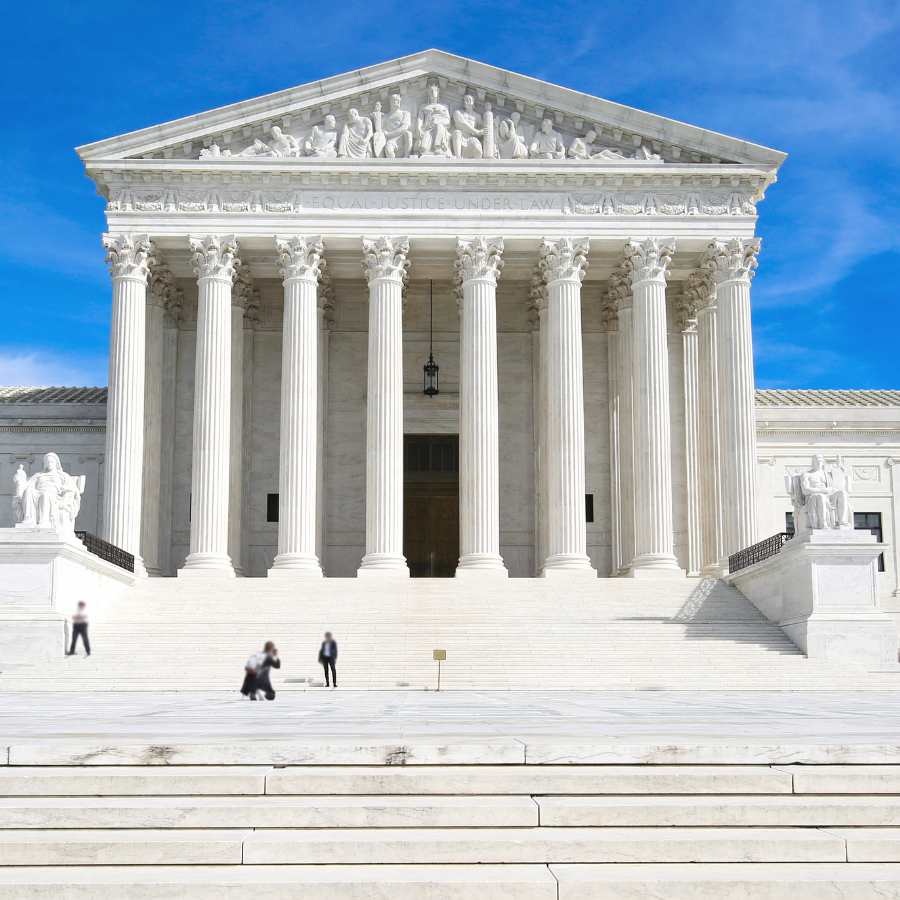
Supreme Court Passes on Corporate Transparency Act Challenge; CIR Vows to Keep Fighting.
Today the Supreme Court declined to hear Texas Top Cop Shop v. Blanche (No. 25-1290), the Center for Individual Rights’…

May 2026
Small Business Owners Ask Supreme Court to Hear Challenge to “Orwellian” Law That Treats Entrepreneurs as Suspects
Washington, DC—Running a dairy farm shouldn’t require registering your personal information in a federal law-enforcement database. But that’…

Jan 2025
Corporate Transparency Act: Supreme Court Lifts Injunction
PRESS RELEASE For Immediate Release, January 23, 2025 SCOTUS Lifts One Corporate Transparency Act Injunction Trump Administration Must Now Act While Litigation…

Dec 2024
Corporate Transparency Act: Injunction Restored
PRESS RELEASE For Immediate Release, December 27, 2024 Fifth Circuit Panel Reinstates Nationwide Injunction Halting Corporate Transparency Act Reporting Mandate Small businesses…

Dec 2024
Corporate Transparency Act: Emergency Fifth Circuit Appeal
PRESS RELEASE For Immediate Release, December 24, 2024 Small Businesses File Emergency Appeal of Fifth Circuit Panel Decision That Restored a Sweeping…

Dec 2024
Corporate Transparency Act: Preliminary Injunction
PRESS RELEASE For Immediate Release: December 3, 2024 Texas Federal Judge Issues Nationwide Injunction to Halt Unconstitutional Corporate Transparency Act (CTA) 32 Million…
Nov 2024
Corporate Transparency Act: Ninth Circuit
PRESS RELEASE For Immediate Release November 25, 2024 Oregon Small Business Owners Appeal Court Decision Upholding Invasive Federal Reporting Mandate as December 31…

May 2024
Federal Law Threatens Criminal Penalties for Small Businesses that Do Not Report Confidential Information
The Center for Individual Rights filed a federal lawsuit in the Eastern District of Texas challenging the Corporate Transparency Act (…
Share